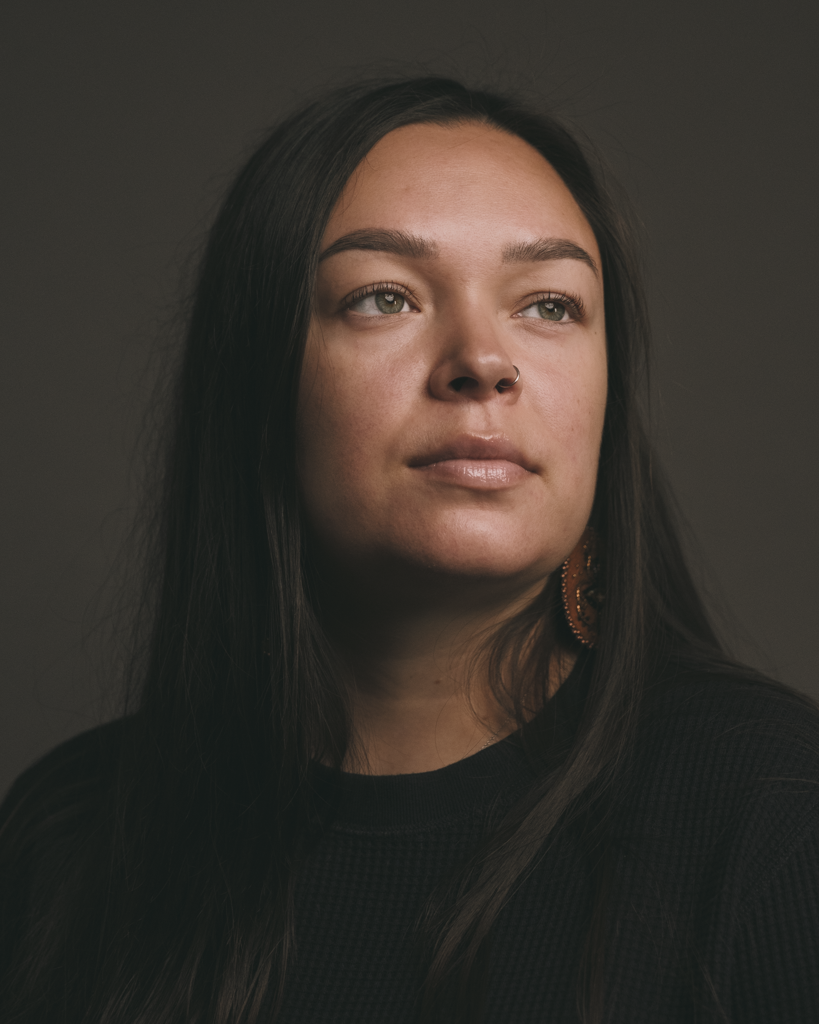
“My first experience with a caribou or with a hunt was when I was doing the tundra science camp with the GNWT in 2007. I was sixteen years old and Michel Louis Rabesca, he’s an elder from Behchokǫ̀, he was out there and he was the culture teacher. Yeah, so he shot a caribou and he told all the kids to come and help butcher the caribou, so we walked for a little ways and we found where the caribou was laying. So we all helped to butcher the caribou and I carried – I helped to carry the antlers the whole way back to the camp and I was so proud of myself. Yeah, I was so proud of myself and I thought to myself ‘I was like wow, this is what our ancestors did back then’ and I just felt really connected. I just felt really connected to my culture. Growing up, I didn’t have a chance to go hunting so that was my first experience with the caribou and now every time I see Michel, um, every time I see Michel Louis I just think of that story.
Since we can’t hunt the caribou anymore, the monitoring is a way to get back on the land and to spend time on the land. And I think that’s important especially some people they have addictions when they stay in town and they try – they use our camp like a wellness, a sobering camp even though that’s not really the intended purpose. But, yeah, so I just think having more monitoring and culture camps is a way to get back on the land to heal people.”