About the Project
Ekwǫ̀ is the Tłı̨chǫ Dene word for caribou.
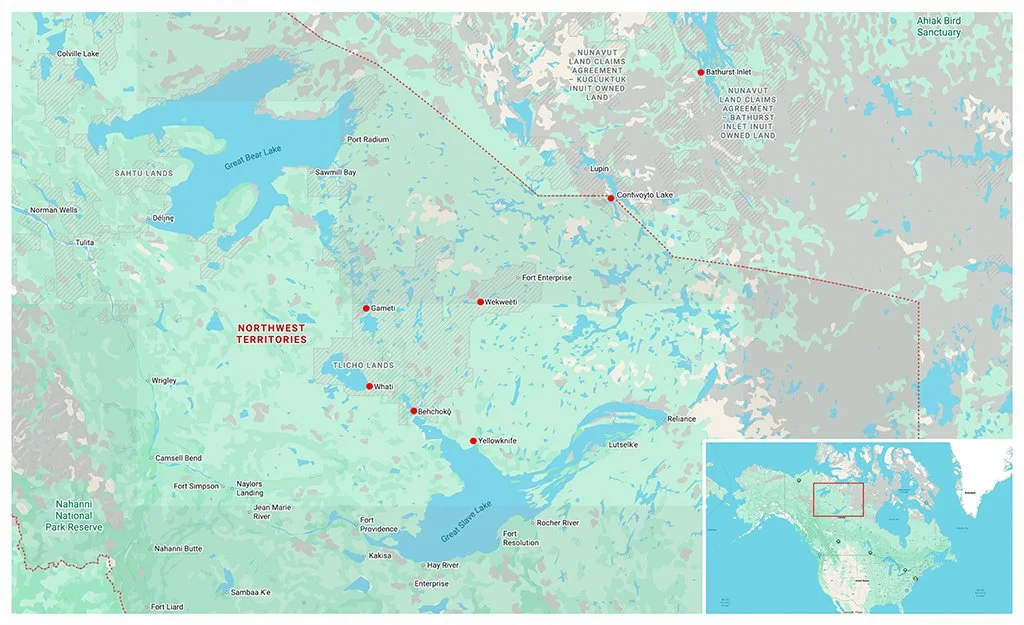
In 2012, I was in the community of Behchokǫ̀, Northwest Territories to cover a debate with Indigenous leaders, elders, non-Indigenous hunting outfitters, wildlife officers and bureaucrats from the Government of the Northwest Territories to decide if hunting should be banned to allow the Bathurst caribou herd recover after significant decline. The community hall was filled with speakers and onlookers, jockeying for position in a cramped and poorly lit gymnasium to see how this decision would play out. The stakes were high. Indigenous people would potentially lose a source of food, outfitters would lose their businesses. It was a tense time with a lot of emotion. Hunting restrictions were implemented three years later, in 2015 – a chance to hit pause, study the herd, and hope that the numbers would rebound.
A decade on, the population of the Bathurst continues to drop, and is now at roughly 3,600 animals. At it’s peak in the 1980’s, the herd was numbered at half a million. What went wrong? I thought back to those first debates around hunting and wondered how this loss has impacted Dene communities. In 2024, I was awarded the Dr. Jane Goodall Environmental Photography Grant from Vital Impacts to work on a year-long documentary photo project to talk with Tłı̨chǫ and Yellowknives Dene residents, and to photograph ongoing conservation efforts. My goal for this project has been two-fold: to show how the loss of caribou is impacting everyday people in Northern communities, and to highlight Ekwǫ̀ Nàxoèhdee K’è – a team of Indigenous researchers that are at the forefront of studying and offering recommendations on how the herd can be saved from total collapse.
This website is a living archive of Dene people’s reliance on ekwǫ̀ as a source of food, clothing, art, music, folklore and deep cultural connections.
Mahsi Cho (thank you very much) to everyone who graciously took their time in being interviewed and photographed.
Area of Study
About the Photographer
Pat Kane is a visual storyteller based in Yellowknife, Northwest Territories, on the traditional land of the Yellowknives Dene First Nation.
He takes a documentary approach to stories about life in Northern Canada, with a special focus on issues important to Indigenous people, including the relationship between land and identity.
Pat is a National Geographic Explorer, a 2020 World Press Photo Joop Swart Masterclass mentee, and the recipient of the 2024 Dr. Jane Goodall Vital Impacts Environmental Photography grant. His work has been exhibited in galleries and at festivals internationally, and published by National Geographic, The New York Times, World Press Photo, The Atlantic, The Globe and Mail and other publications worldwide.
Pat is of Anishinaabe (Algonquin) and Irish ancestry, and is a member of the Timiskaming First Nation.
See more of his work at: www.patkanephoto.com